Source Princess Costume Options for Halloween, Parties, and Cosplay
Explore 30 available princess costume listings suitable for children's Halloween events, indoor and outdoor parties, and cosplay activities. Compare multicolor polyester apparel in various sizes from Zhejiang suppliers with OEM/ODM customization options; compare the available evidence and request quotations based on your requirements.
Key considerations
Products List


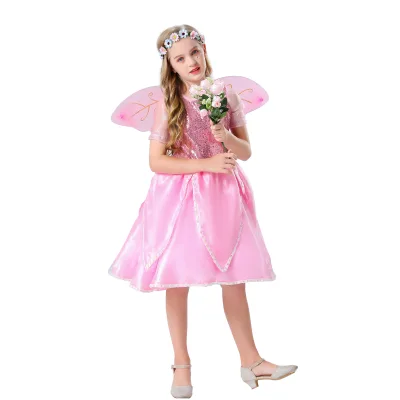
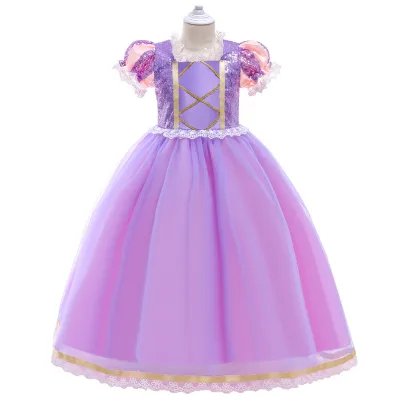
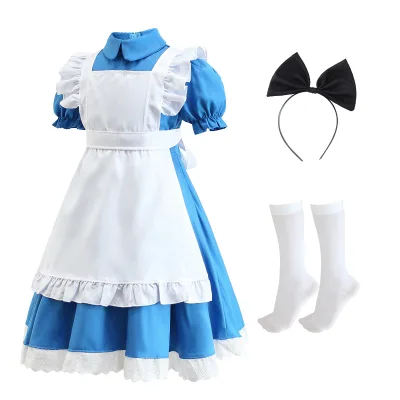
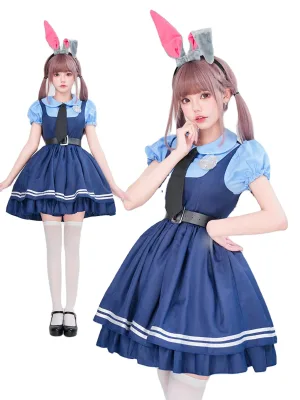
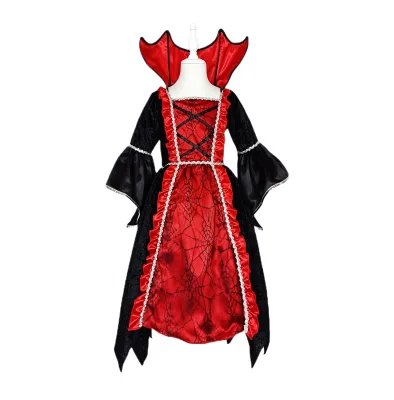
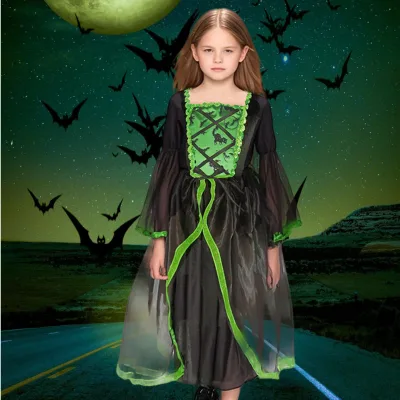
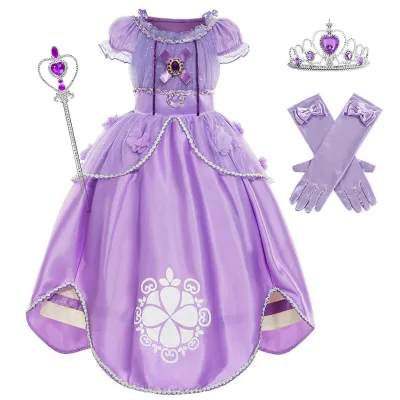
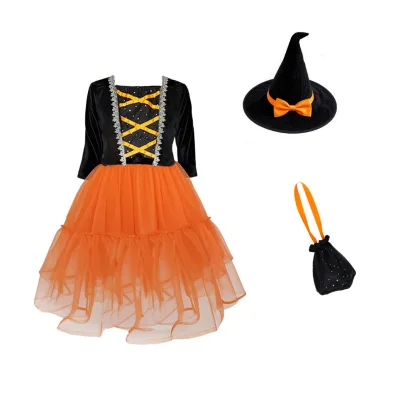
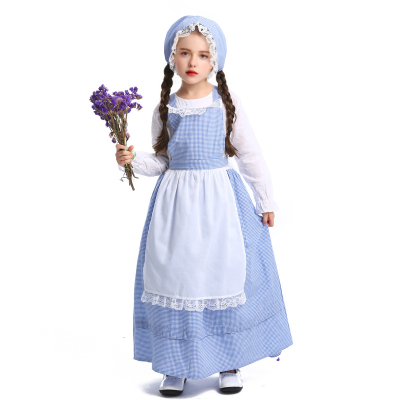
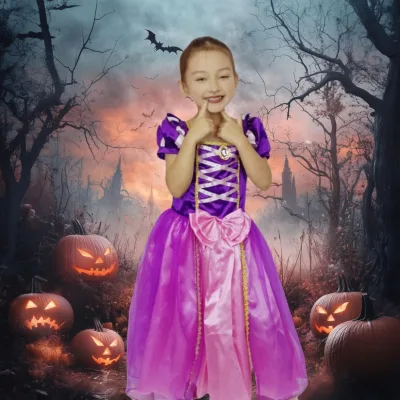


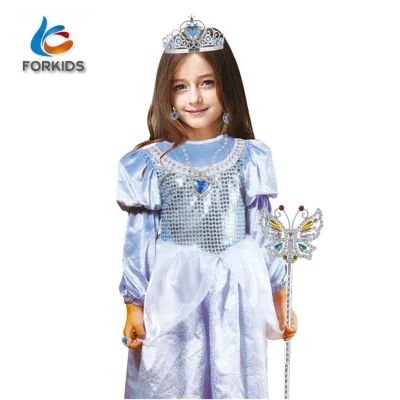
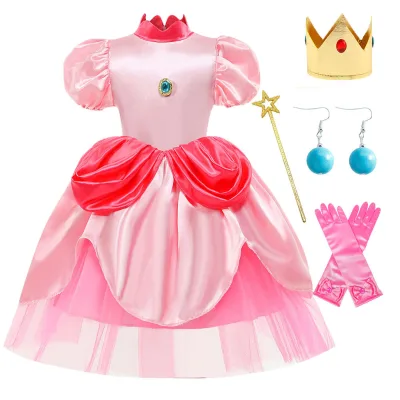
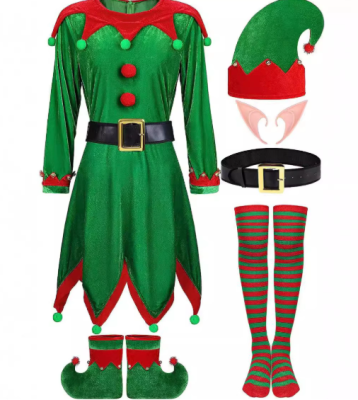
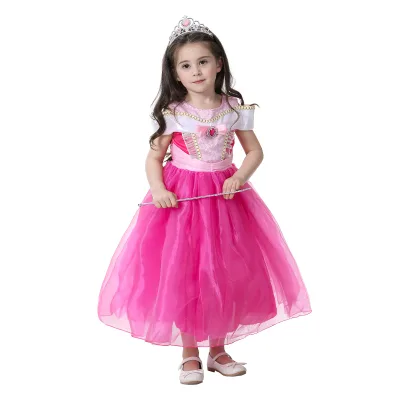
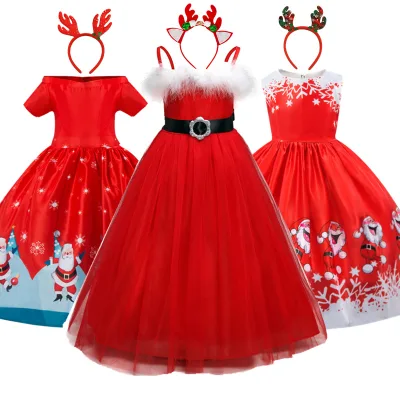


Comprehensive Sourcing Guide
Princess Costume Sourcing Guide
Buyers evaluating princess costume listings must first distinguish between apparel intended for children and items designed for home decoration or party accessories. The observed market data indicates a split in product categories, with specific models explicitly labeled for Halloween costumes and others categorized strictly as indoor or outdoor decorations. This distinction is critical because a supplier offering a "princess" style item may actually be selling a decorative prop rather than a wearable garment, leading to fulfillment errors if the application is not verified during the initial inquiry phase.
Procurement teams should also scrutinize the stated customization capabilities and minimum order quantities before committing to a supplier. While some listings confirm that customization is available and welcome OEM/ODM requests, the minimum order quantities vary significantly, ranging from as low as two pieces for specific in-stock items to several hundred units for custom production runs. Understanding these thresholds early prevents wasted negotiation time and ensures that the buyer's volume requirements align with the supplier's production capacity and inventory strategy.
Product Scope and Observed Listing Signals
The product scope for princess costumes in this dataset spans multiple functional categories, including children's apparel, party decorations, and cosplay items. Specific models are identified with usage tags such as "Halloween Costume" and "Christmas Home Decoration," while others are classified under general "Apparel & Accessories" or "Decoration" types. Buyers must carefully map these signals to their specific needs, as a listing marked for "Children" suitability may not meet the durability or sizing requirements for adult cosplay events, and vice versa.
Color and material attributes provide further clarity on the intended product application, with observations noting "Multicolor" options and "Polyester" as a primary material. These attributes suggest a focus on vibrant, durable fabrics suitable for repeated use in festive environments. However, the presence of "Non Power" sources for certain items indicates that some products are purely textile-based, whereas others might involve electronic components not explicitly detailed in the general scope. Verifying the exact composition and power requirements is essential to ensure the product matches the visual and functional expectations of the target audience.
Technical Specifications to Verify
Buyers must rigorously verify size specifications, as the observed data presents conflicting standards ranging from specific height measurements like "110-150cm" to standard clothing sizes such as "S, M, L, XL, 2XL, 3XL." Some listings offer "Customized Size" options, which requires a detailed discussion on pattern grading and tolerance levels before production begins. Relying on a single size chart without confirming the specific model number, such as "HC-001" or "HD-024," can lead to significant fit issues, particularly when sourcing for children where growth and safety margins are paramount.
Packaging and component details are equally critical technical factors that influence logistics and final presentation. The data indicates that some items are packed as "One Set in a OPP Bag" with attached size tags, while others utilize "Carton" packaging for bulk shipments. Additionally, the component list for certain models includes "Dresses, Suits," suggesting that a single order might comprise multiple garment pieces rather than a single unit. Confirming the exact contents of the package and the dimensions of the single package size, such as "40X30X15 cm," is necessary for accurate freight cost calculations and warehouse planning.
Compliance and Safety Documentation
Safety compliance is a non-negotiable aspect of sourcing children's apparel, yet the provided facts do not explicitly list specific certification standards like ASTM or EN71. Buyers must therefore request proof of compliance with relevant regional safety regulations for children's clothing, including flammability standards and chemical restrictions for dyes used in polyester fabrics. The absence of stated certifications in the listing signals does not imply non-compliance, but it does place the burden of verification on the buyer to ensure the supplier can provide valid test reports before mass production begins.
For items intended for party decoration or general use, compliance requirements shift toward general product safety and material safety data sheets. While some listings mention "OEM/ODM Welcomed," this customization capability does not automatically extend to regulatory approvals. Buyers should explicitly ask whether the supplier has experience exporting to their target market and can provide documentation for the specific product type, whether it is a costume or a decoration. Without this verification, there is a risk of the goods being held at customs or rejected by retailers due to missing safety documentation.
Cost Drivers and Commercial Terms
The commercial landscape for these products is defined by a wide range of minimum order quantities, which directly impacts the unit cost and cash flow requirements. Listings show MOQs ranging from 2 pieces for in-stock items to 300 pieces for custom orders, creating a tiered pricing structure that buyers must navigate. Understanding the relationship between order volume and price is essential, as smaller orders may carry a premium for handling and packaging, while larger orders might benefit from economies of scale in material procurement and production setup.
Payment terms and shipping logistics are additional cost drivers that require careful negotiation. The observed data includes payment methods such as "TT, Trade Assurance, Western Union, MoneyGram," offering flexibility but also varying levels of buyer protection. Furthermore, delivery times are substantial, with lead times ranging from 30 to 50 working days for production and sample times of 3 to 10 days. Buyers must factor these timelines into their inventory planning and consider the cost implications of different shipping methods, such as DHL, EMS, or sea freight, to ensure the total landed cost remains within budget.
Supplier Qualification and Quality Control
Supplier qualification should begin with verifying the place of origin and production capacity, as the data consistently points to "Zhejiang, China" as the primary manufacturing hub. This region is known for its textile industry, but buyers must confirm that the specific factory has the expertise to handle the detailed customization required for princess costumes, including intricate sewing and fabric handling. Requesting photos of the production line or a video tour can provide tangible evidence of the supplier's capability to maintain consistent quality across large batches.
Quality control protocols must be established before the first sample is approved, focusing on the consistency of materials and finishing. Since the product attributes include "Multicolor" and "Polyester," buyers should verify that color fastness and fabric strength meet the intended usage standards, especially for children's wear. The availability of a sample time of 3 to 10 days allows for a thorough inspection of the prototype, but buyers should also define clear acceptance criteria for defects in stitching, sizing, and packaging to prevent quality issues in the final shipment.
Long-Term Procurement Checks
Establishing a long-term partnership requires a systematic approach to monitoring supplier performance over multiple order cycles. Buyers should track key performance indicators such as on-time delivery rates, sample approval turnaround times, and the frequency of quality deviations. The initial sample time of 3 to 10 days is a baseline, but consistent delays in the 30 to 50 working day production window can disrupt supply chains. Regular audits and performance reviews help identify trends that might indicate underlying issues in the supplier's operations or resource allocation.
Sustainability and adaptability are also critical factors for long-term procurement success in the costume and apparel sector. As market trends shift, suppliers must demonstrate the ability to adapt their customization options and material sourcing strategies. Buyers should inquire about the supplier's capacity to handle new designs or changes in safety regulations without significant lead time penalties. Building a relationship based on clear communication and mutual growth ensures that the supply chain remains resilient and responsive to future market demands.
FAQs
What customization options are available for princess costumes?
Customization is available for these princess costumes, allowing buyers to request specific designs or modifications. The products support OEM and ODM services, enabling tailored solutions for different needs. Buyers can inquire for more details regarding specific customization requirements and lead times.
How long does it take to receive samples of the costumes?
Sample times vary between 3 to 10 working days depending on the specific product model selected. Some items require 3 to 7 days while others may take up to 10 days for preparation. This timeframe ensures quality checks before the samples are shipped to the buyer for evaluation.
Which minimum order quantities apply to these princess costumes?
Minimum order quantities range from 2 pieces to 300 pieces depending on the specific product model and supplier. Some items have an MOQ of 200 pieces, while others start at 100 or 50 pieces. Buyers should check the specific product details to confirm the exact MOQ required for their order.
Can these costumes be used for both indoor and outdoor events?
Yes, the costumes are suitable for both indoor and outdoor applications, making them versatile for various events. They are designed for usage in settings like Halloween parties or Christmas decorations. The materials used ensure durability for different environments while maintaining the desired aesthetic appeal.
What is the delivery time for bulk orders of these costumes?
The delivery time for bulk orders is typically between 30 to 50 working days after sample confirmation. This period covers production and shipping logistics from the origin in Zhejiang, China. Buyers should plan their procurement schedule accordingly to ensure timely arrival of the costumes.
Which materials are used to make these princess costumes?
The costumes are primarily made from polyester, ensuring comfort and durability for children. This material choice supports the multicolor designs and various styles available in the product range. The fabric is selected to meet safety standards while providing a soft texture suitable for young wearers.
How are the costumes packaged for shipment to international buyers?
Packaging varies by product, with some items packed in cartons and others in OPP bags with size tags. Single package sizes can be around 40 by 30 by 15 centimeters for certain models. The packaging is designed to protect the costumes during transit while keeping them organized for easy distribution.